
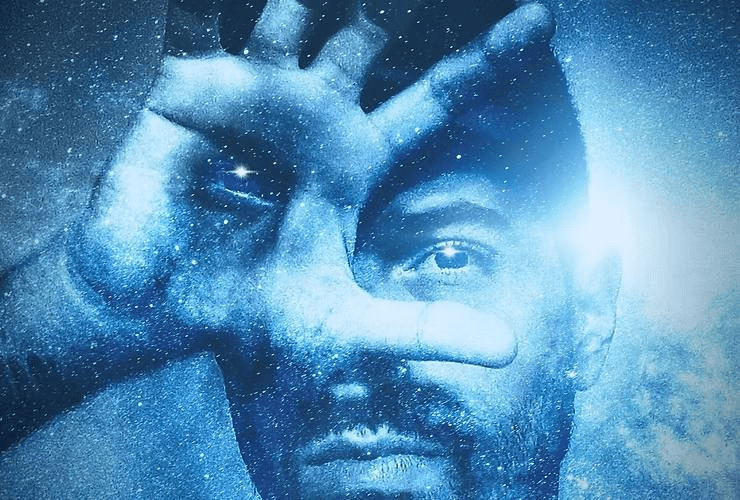
“Be transformed by the renewing of your mind.” — Romans 12:2
For thousands of years, humanity has searched for ways to draw closer to God, elevate consciousness, and experience profound inner transformation. Across cultures and religions, three practices consistently appear: prayer, music, and the spoken word.
Why?
Could there be a connection between these practices and the way we experience peace, clarity, and spiritual awareness?
While science has demonstrated that prayer, meditation, and music can influence stress, mood, and brain activity, many spiritual traditions go further. They propose that these practices also elevate the human spirit, making a person more receptive to divine guidance and deeper awareness.
Whether viewed through faith or psychology, one truth remains remarkably consistent: what we repeatedly focus on changes us.
What Does “Frequency” Really Mean?
The word frequency has two different meanings that are often blended together.
In physics, frequency refers to the measurable rate at which something vibrates, such as a sound wave or electromagnetic wave.
In spiritual discussions, “raising your frequency” is generally used as a metaphor. It describes moving toward qualities such as love, compassion, forgiveness, gratitude, hope, and inner peace rather than fear, resentment, or despair.
These are different concepts. The first is a measurable property of waves. The second is a symbolic way of describing a person’s emotional or spiritual state.
Understanding this distinction allows us to appreciate both scientific knowledge and spiritual language without confusing the two.
Prayer: Aligning the Heart
Prayer has been practiced throughout history—not simply to ask for help, but to cultivate humility, gratitude, surrender, and trust.
Research suggests that prayer and contemplative practices can reduce stress, improve emotional well- being, and foster resilience in many people.
For believers, prayer is more than a calming exercise. It is a relationship with God.
In moments of sincere prayer, many people describe experiencing peace that seems to surpass ordinary understanding.
They report feeling guided.
Comforted.
Protected.
Loved.
Whether these experiences are interpreted spiritually, psychologically, or both, they often become turning points in people’s lives.
Music: The Language Beyond Words
Music has always accompanied humanity’s most sacred moments.
Ancient temples echoed with chants.
Churches filled with hymns.
Indigenous ceremonies with rhythmic drums.
Modern worship often blends traditional faith with contemporary music.
Music has a remarkable ability to shape emotion, memory, and attention. It can calm anxiety, inspire courage, or deepen reflection.
Many people also find that instrumental music, choirs, or meaningful songs help them focus during prayer or meditation.
For some, certain songs seem to quiet mental distractions and create space for spiritual reflection.
Whether understood as a psychological response, a spiritual experience, or both, music often serves as a bridge between the mind and the heart.
The Spoken Word
The Bible repeatedly emphasizes the significance of speech.
God creates through His word.
Jesus speaks healing.
Believers are encouraged to bless rather than curse, encourage rather than condemn, and speak truth with love.
Our words influence relationships, shape our thinking, and affect how we respond to challenges.
Modern psychology likewise recognizes that our internal dialogue and self-talk can influence motivation, resilience, and emotional health.
The words we repeat become part of the story we tell ourselves.
Renewing the Mind
Perhaps the greatest transformation is not external.
It begins internally.
Every fearful thought can be replaced with courage.
Every bitter memory with forgiveness.
Every hopeless moment with faith.
Every anxious morning with gratitude.
As these habits become daily practice, many people describe feeling more centered, peaceful, and spiritually aware.
This is not because certain words possess mystical power on their own, but because repeated practices can reshape our outlook, deepen our faith, and influence how we live.
Consciousness and Spiritual Awareness
The phrase “higher consciousness” means different things to different people.
In psychology, it may refer to heightened self-awareness or mindful attention.
In many spiritual traditions, it refers to becoming more aware of God’s presence, living with compassion, and recognizing a deeper purpose.
Although these perspectives differ, they often converge on similar practices:
Quiet reflection
Prayer
Gratitude
Compassion
Forgiveness
Meaningful music
Intentional speech
These habits consistently help people cultivate greater peace and purpose.
A Daily Practice of Faith
Imagine beginning each day with three simple commitments:
Pray with sincerity.
Not merely asking for blessings, but listening with humility.
Fill your mind with music that inspires hope.
Choose songs that encourage peace, gratitude, and love.
Speak words that reflect the person you hope to become.
Offer encouragement.
Practice forgiveness.
Express gratitude.
Bless rather than condemn.
These practices may not remove every hardship, but they can shape the way you meet life’s challenges.
Final Thoughts
Can prayer, music, and spoken words raise human consciousness?
Science supports the idea that these practices can influence mood, attention, stress, and emotional well- being.
Many religious and spiritual traditions believe they can also deepen a person’s relationship with God and expand spiritual awareness.
While these spiritual claims cannot be confirmed or disproven by science, they have inspired countless people across generations.
Perhaps the deepest lesson is not about chasing extraordinary experiences.
It is about becoming more compassionate.
More grateful.
More forgiving.
More attentive to the sacred in everyday life.
Whether you call it renewing the mind, growing in faith, or awakening the spirit, the journey begins with what you choose to fill your heart with—and what you choose to speak into the world.
Faith may not always change your circumstances overnight.
But it can change the person who walks through them.
And sometimes, that is where the greatest transformation begins.

